

Active Recovery: The Athlete's Guide to Smarter Rest and Faster Gains

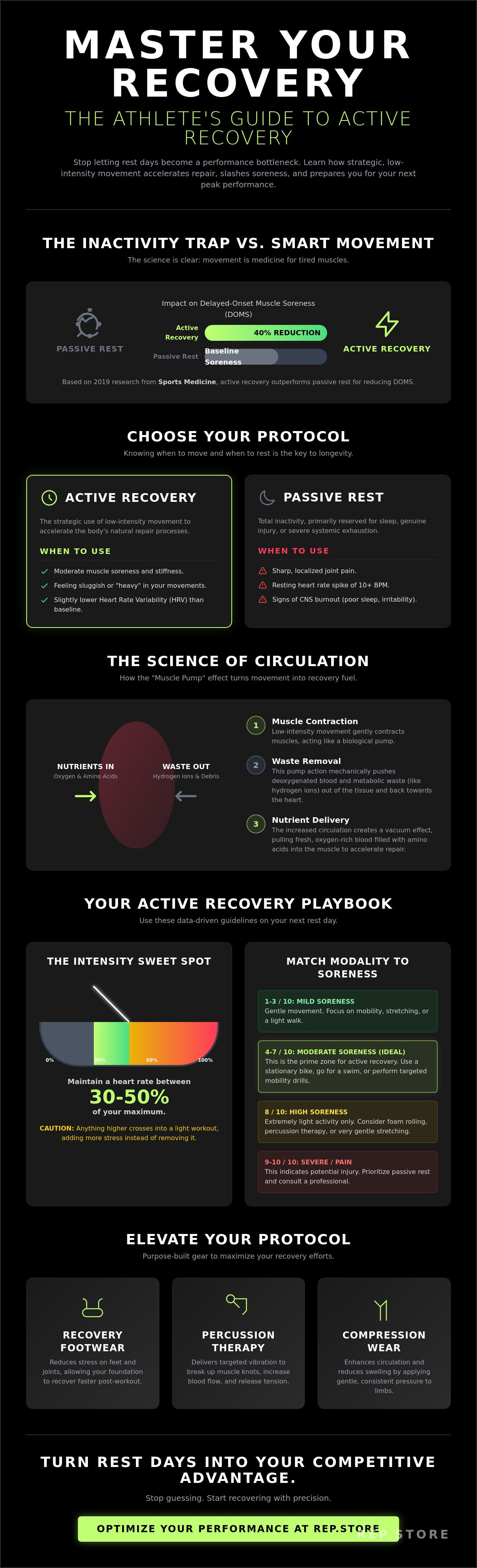
Sitting on the couch for 24 hours isn't a recovery strategy; it's a performance bottleneck. Research published in 2019 in Sports Medicine confirms that active recovery reduces delayed-onset muscle soreness (DOMS) by up to 40% compared to sitting still. If you're feeling stiff, sluggish, and frustrated by plateaus, your rest days are working against you. You don't need more time off. You need a smarter protocol that prioritizes blood flow over total inactivity.
We understand the frustration of waking up too sore to train at 100%. You want to get back to the gym faster without feeling like every joint is locked in place. This guide teaches you how to master active recovery to slash muscle soreness, clear metabolic waste, and ensure you're ready for your next heavy session. We'll examine the exact science behind low-intensity movement and the essential tools, such as Oofos recovery sandals or the 2026 Theragun PRO Plus, that turn your rest days into a competitive advantage.
Key Takeaways
- Movement is medicine. Learn why keeping your heart rate between 30-50% is the secret to flushing metabolic waste and ending the cycle of stiffness.
- Stop guessing on your off days. Master a simple 1-10 soreness scale to choose the specific active recovery modality that accelerates your return to the squat rack.
- Force blood into tired tissues using the "Muscle Pump" effect. This strategic circulation clears chemical byproducts significantly faster than passive rest.
- Elevate your protocol with purpose-built gear. Discover why Oofos Recovery Sandals and targeted compression are non-negotiables for any elite athlete's toolkit.
What is Active Recovery and Why Performance Athletes Need It
Success in the gym isn't just about what you do during the 60 minutes of your workout. It's about how you manage the other 23 hours. Active recovery is the strategic use of low-intensity movement to accelerate the body's repair process. Specifically, this means maintaining a heart rate between 30% and 50% of your maximum. If your heart rate climbs higher, you've crossed the line into a light workout. That adds stress instead of removing it. You don't need more fatigue; you need a biological flush.
Performance athletes often struggle with the psychological shift required for downtime. They view rest as lost time. This is a mistake. Proactive downtime keeps the movement habit alive without draining your battery. It allows you to stay disciplined while giving your tissues the environment they need to heal. True recovery is about blood flow. The Science of Circulation: How Movement Heals Muscle demonstrates that light activity removes blood lactate and metabolic waste significantly faster than sitting on a sofa. Movement is the catalyst for repair.
Active vs. Passive Recovery: The Verdict
Total stillness has its place, but it's usually reserved for sleep. The couch potato trap is real. When you remain completely inactive, your lymphatic system slows down and muscle stiffness increases. Active recovery bridges the gap between high-intensity sessions by acting as a biological pump. While research confirms that active movement can cut DOMS by 40%, passive recovery is only required when you face genuine injury or complete central nervous system (CNS) exhaustion. For the everyday athlete, movement is almost always the superior choice.
Identifying Your Recovery Needs
Knowing when to push and when to pull back is the hallmark of an elite trainee. Use these indicators to decide your path:
- Active Recovery: Choose this when you have moderate muscle soreness, feel heavy in your movements, or have a slightly lower Heart Rate Variability (HRV) than your baseline.
- Passive Rest: Choose this if you experience sharp joint pain, resting heart rate spikes of 10 beats per minute or more, or signs of CNS burnout like poor sleep and irritability.
Data doesn't lie. If your wearable tech shows a significant drop in HRV, your body is screaming for a break. Listen to it. Use your active days to focus on mobility and blood flow, ensuring you return to your next session with 100% output potential. Stagnation is the enemy of progress. Smart movement is the solution.
The Science of Circulation: How Movement Heals Muscle
Circulation is the engine of repair. When you finish a grueling session, your muscles are filled with metabolic byproducts and micro-tears. Passive rest allows these fluids to stagnate. Active recovery, however, utilizes the "Muscle Pump" effect. By engaging in low-intensity movement, your muscles act as secondary pumps that mechanically push deoxygenated blood and cellular debris back toward the heart. This process initiates an automated cleaning service for your vascular system, ensuring that waste doesn't settle in your tissues.
The primary goal of this increased blood flow is nutrient delivery. Increased blood flow serves as a high-speed delivery system, transporting oxygen and essential amino acids directly to the micro-tears in muscle fibres to accelerate structural repair. This biological efficiency is why movement feels better than standing still. By maintaining circulation, you significantly reduce the severity of Delayed Onset Muscle Soreness (DOMS). Experts at the Cleveland Clinic highlight various Top Active Recovery Modalities that facilitate this process without adding new structural stress to your frame.
Lactic Acid and Beyond
Most athletes blame lactic acid for their second-day soreness. This is a myth. Lactic acid typically clears from your system within 60 minutes of finishing a workout. The real barrier to recovery is the accumulation of hydrogen ions, which drop your muscle pH and cause that lingering "heavy" feeling. Movement helps restore pH balance. Furthermore, your lymphatic system, which handles post-workout swelling, has no pump of its own. It relies entirely on muscle contraction to move fluid. If you don't move, you stay swollen.
Neurological Recovery
Physical repair is only half the battle. High-intensity training pins your nervous system in a sympathetic "fight or flight" state. If you remain in this state, your adrenal system stays taxed and cortisol levels remain elevated. Low-intensity steady-state (LISS) movement signals the brain to transition into a parasympathetic "rest and digest" mode. This downregulation is essential for hormonal balance and improved sleep quality. When you calm the nervous system through light movement, you achieve deeper REM cycles. You don't just feel better; you actually recover at a cellular level. Using specialized TRNR recovery tools can help you target these neurological pathways more effectively during your downtime.
Top Active Recovery Modalities for Strength and Metcon Athletes
Choosing the right modality is the difference between genuine repair and accidental overtraining. For athletes who live in high-intensity intervals, active recovery must be non-competitive and low-impact. Zone 2 cardio remains the gold standard. It builds your aerobic base and improves mitochondrial health without taxing your central nervous system. This low-intensity work creates a vascular flush that clears metabolic byproducts while keeping your heart rate in the "Green Zone."
Non-weight-bearing activities like swimming or hydrotherapy offer unique advantages. Water provides hydrostatic pressure that aids circulation while removing the eccentric load from your joints. This is crucial for Metcon athletes who spend their week under heavy barbells. If you prefer staying on land, functional flow sessions or yoga restore range of motion that often tightens during heavy lifting cycles. Citing the National Academy of Sports Medicine on What is Active Recovery, these sessions should focus on movement quality rather than sweat equity.
Low-Impact Steady State (LISS) Options
Walking is the most underrated tool in your arsenal. A 30-minute stroll isn't just about movement; it's a neurological reset. If you choose incline walking, keep the grade low to ensure you don't spike your heart rate out of the recovery window. Cycling is another powerhouse for leg recovery. Use a high cadence with low resistance to "spin out" the legs. This mechanical movement encourages blood flow to the quads and hamstrings without causing further micro-tears in the muscle fibres.
Mobility and Soft Tissue Work
Recovery days are the time to address "hot spots" before they become injuries. Use TRNR massage balls or foam rollers for targeted myofascial release. Focus on your ankle and hip mobility; these are the primary failure points in deep squats and explosive movements. Restoring this range of motion directly impacts your training shoes performance by allowing for better force distribution. While static stretching has its place, dynamic stretching is often superior for recovery as it keeps the blood moving. Address the stiffness today so you can dominate the platform tomorrow.
How to Execute Your Active Recovery Protocol in Dubai
Executing a protocol in the UAE requires more than just "taking it easy." It is a calculated process designed to reset your biology. Follow these five steps to ensure your active recovery actually yields results rather than adding to your fatigue debt.
- Step 1: Assess Soreness. Rate your muscle pain on a scale of 1 to 10. If you're at a 4 or 5, proceed with movement. If you're hitting an 8 or above, prioritize sleep first.
- Step 2: Avoid Mimicry. Don't use the same movement patterns as your primary sport. If you're a powerlifter, don't do "light squats." Go for a swim or a walk instead.
- Step 3: Monitor Heart Rate. Keep your heart rate below 120 BPM. For most athletes, this ensures you stay in the aerobic recovery zone without triggering a new stress response.
- Step 4: Nasal Breathing. Breathe exclusively through your nose. This forces your body into a parasympathetic state, signaling to your brain that the "fight" is over and repair can begin.
- Step 5: Strategic Hydration. The UAE's arid environment drains you faster than you realize. Aim for an extra 1 liter of water with added electrolytes on your recovery days.
The Immediate Post-Workout Cooldown
Never go from max effort to sitting in a car. This is a recipe for immediate stiffness and blood pooling. Dedicate 10 minutes to a transition phase. A light walk or a low-resistance flush on an assault bike allows your heart rate to descend gradually. This small window is where you begin clearing metabolic waste before it has a chance to settle. It's the difference between waking up stiff and waking up ready.
The Full Recovery Day Schedule
A successful rest day is structured. Start your morning with 20 minutes of light mobility or yoga to wake up the joints. Throughout the mid-day, focus on Non-Exercise Activity Thermogenesis (NEAT); stay active by walking during calls or choosing the stairs. In the evening, dedicate 15 minutes to focused tissue work. You can find professional-grade TRNR recovery accessories to target specific trigger points and ensure your fascia remains supple for your next session.
Navigating the Dubai Heat
Heat is a stressor. Attempting outdoor recovery in 40°C+ temperatures can actually increase your systemic load and spike your heart rate. When the mercury rises, move your protocol indoors. Utilise climate-controlled spaces like the indoor tracks at Dubai Hills Mall or a temperature-regulated gym. Your goal is to lower your core temperature and heart rate, not test your heat tolerance. Smart recovery means choosing the environment that supports your biology.
Optimising the Process: Essential Gear for Active Recovery
Recovery is a strategic investment in your future performance. It's not a passive state of being. If you spend your off-hours in flat, unsupportive footwear, you're sabotaging your next session before it starts. Elite active recovery requires specialized equipment that offloads stress from your joints while facilitating blood flow. You've invested in your gym; now invest in your downtime. High-quality gear turns a simple rest day into a biological reset.
Compression gear is another non-negotiable for the serious athlete. It assists in venous return, reducing lower limb swelling that often follows high-volume Metcon sessions. By aiding blood return to the heart, you accelerate the clearance of metabolic waste. This isn't about fashion. It's about vascular efficiency. Using the right tools ensures that your body isn't working harder than it needs to during its scheduled downtime.
The Oofos Advantage
Traditional gym shoes are built for energy return. They use EVA foam to bounce you off the floor. Oofos Recovery Sandals use patented OOfoam™ technology, which does the exact opposite. It absorbs 37% more impact than traditional footwear. This significantly reduces the load on your ankles, knees, and lower back during your "off" hours. In Dubai, where daily life often involves navigating hard surfaces in massive malls, switching to Oofos is a survival tactic. It's the difference between cumulative fatigue and waking up fresh.
Targeted Recovery with TRNR
Your "off" days should involve precision work. Use TRNR massage kits to address myofascial restrictions in your lats and glutes. These tools allow for deep trigger point therapy that standard rollers can't reach. Combine this with light resistance bands for high-rep, low-tension sets to flush the muscles with oxygenated blood. Creating a dedicated recovery corner at home with Nike Strength accessories makes your protocol frictionless. If the tools are visible, the work gets done.
The foundation of this entire process starts with your primary gear. Choosing the right training shoes prevents unnecessary foot fatigue during your heavy sessions. This leaves you with more "recovery capital" to spend on your rest days. Don't let poor gear choices become the bottleneck in your training cycle. Control your environment, optimize your gear, and dominate your next session.
Take Control of Your Recovery Cycle
Passive rest is a relic of the past. If you want to break through performance plateaus and maintain a high-volume training schedule, active recovery is your only path forward. By keeping your movement intentional and your heart rate below 120 BPM, you turn metabolic waste clearance into an automated process. You've seen the data: light movement can reduce muscle soreness by 40% compared to sitting still. Stagnation isn't just boring; it's a performance killer that delays your return to the platform.
Don't leave your progress to chance. We've curated a selection of elite tools designed to make your downtime as effective as your training. As the exclusive UAE distributor of Oofos and TRNR, we provide the technology you need to offload joint stress and target myofascial hot spots. Visit us at our Dubai Hills Mall location for expert gear fitting or browse our collection online. Our team consists of athletes who understand that your gear must work as hard as you do.
Success belongs to those who manage their downtime with the same intensity as their workouts. Shop the full recovery collection at REP Store Dubai today and ensure you're ready for tomorrow's session. Your next personal best starts with how you recover right now.
Frequently Asked Questions
Is active recovery better than a full rest day?
Active recovery is generally superior to passive rest for clearing metabolic waste and reducing muscle soreness by up to 40%. However; if your heart rate variability shows a 20% drop or you're facing central nervous system burnout; a full rest day is mandatory. Use movement to heal; but use stillness to reset your brain and adrenals when you're truly red-lined.
How long should an active recovery session last?
A standard session should last between 20 and 45 minutes. Research indicates that low-intensity movement beyond 60 minutes can begin to accumulate new fatigue; which defeats the purpose of the protocol. Keep the duration short enough to feel energized afterward; not drained. If you feel like you need a nap after your recovery; you've stayed too long.
Can I do active recovery every day?
You can perform light movement every day provided your heart rate remains in the Green Zone. Most high-performance athletes utilize a 30-minute walk or light mobility session daily to maintain blood flow. The danger lies in intensity creep. If your active recovery sessions start feeling like workouts; you're overtraining. Monitor your output to ensure you aren't digging a deeper recovery hole.
What heart rate should I stay in for active recovery?
Stay within 30% to 50% of your maximum heart rate. For most trainees; this equates to keeping the heart rate below 120 beats per minute. Staying in this window ensures you're facilitating blood flow and nutrient delivery without triggering a sympathetic nervous system response. If you can't maintain a full conversation while moving; your heart rate is likely too high for repair.
Does walking count as active recovery?
Walking is the most effective and accessible form of active recovery available. It provides the mechanical muscle pump required to move lymphatic fluid without the eccentric load of running or lifting. A 30-minute brisk walk in supportive footwear helps clear hydrogen ions and restores pH balance in the muscle tissue significantly faster than sitting on a sofa.
What should I eat on active recovery days?
Maintain your maintenance calorie intake and prioritize protein to support tissue repair. Many athletes mistakenly slash their calories on rest days; but your body requires energy to facilitate the healing process. Aim for 1.6 to 2.2 grams of protein per kilogram of body weight to ensure your muscles have the building blocks they need to recover from your previous high-intensity sessions.
Is it okay to do active recovery if I have an injury?
Movement is often part of rehabilitation; but you must avoid any activity that causes sharp pain. If an injury is acute; such as a Grade 2 strain from a session within the last 48 hours; passive rest and professional medical advice are required. Once cleared; low-impact movement helps prevent scar tissue build-up and maintains joint range of motion during the healing phase.
Can I use active recovery to lose weight?
Active recovery contributes to weight loss by increasing your Non-Exercise Activity Thermogenesis; but it shouldn't be your primary fat-loss tool. The goal is repair; not a massive caloric deficit. While a 30-minute walk burns approximately 150 to 200 calories; its real value lies in allowing you to return to high-intensity training sooner; where the real metabolic work happens.


