

Are Zero-Drop Shoes Good for Walking All Day? Comfort, Fit and Transition

What if a shoe feels natural at first but demanding after hours on hard ground? Are zero drop shoes good for walking all day? They can be, but comfort depends on more than heel-to-toe drop. Fit, cushioning, your usual footwear and how quickly you adapt all matter.
It’s easy to confuse zero-drop shoes with barefoot or minimalist shoes. Zero drop describes one thing: the heel and forefoot sit at the same level. It doesn’t automatically mean the shoe has little cushioning or structure. That distinction matters when you’re choosing footwear for long days on your feet, especially if firm surfaces leave your feet tired.
This guide explains what to compare, how to assess fit and cushioning, and how to introduce a lower drop gradually. You’ll also learn when a gradual switch may make sense and when to seek professional advice first. UAE shoppers exploring the category can find Vivobarefoot Shoes at REP Store in Dubai Hills Mall. Judge each shoe by its fit and comfort, not the label alone.
Key Takeaways
- Are zero drop shoes good for walking all day? They can suit some walkers, but comfort depends on the shoe, the walking surface and your personal needs.
- Zero drop describes the heel-to-toe height difference, not how much cushioning a shoe has. Compare those features separately.
- Assess fit, underfoot comfort and the surfaces you walk on to judge whether a shoe feels suitable for long days.
- Start with short, comfortable wear periods. Increase them gradually only if your feet and calves feel good.
- REP Store carries Vivobarefoot Shoes at Dubai Hills Mall, Dubai. Assess each shoe against your own fit and comfort needs.
Are zero-drop shoes good for walking all day? Start with what zero drop means
Zero-drop shoes can work for all-day walking, but they aren’t automatically comfortable for everyone. If you’re asking, “are zero drop shoes good for walking all day,” consider the shoe’s overall design, how it fits your feet, the surfaces you walk on and how accustomed you are to this type of footwear. A level platform is one design choice, not a guarantee of comfort.
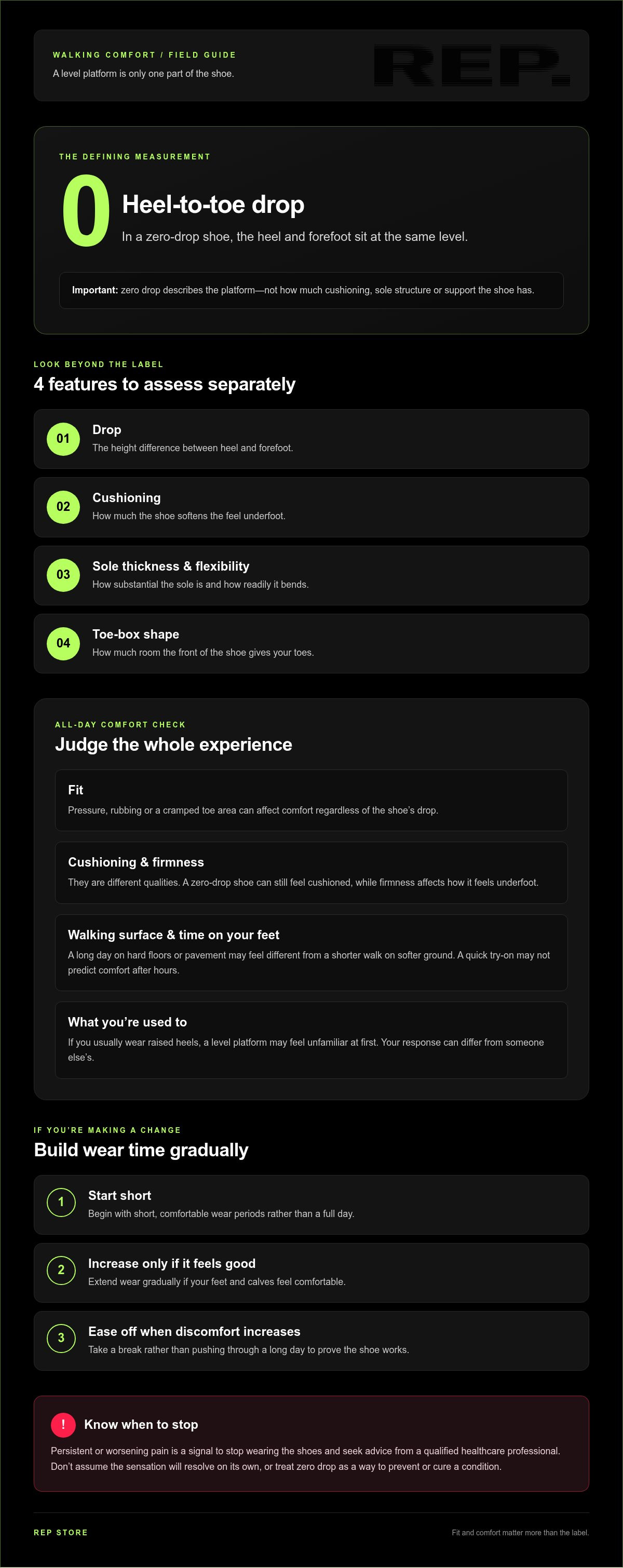
Heel-to-toe drop is the height difference between the heel and forefoot. A zero-drop shoe has no height difference between those areas; a raised-heel shoe places the heel higher. Drop tells you about the platform, but not how soft, thick, flexible or supportive the shoe feels underfoot.
What does zero drop mean in a walking shoe?
Picture the shoe from the side. In a zero-drop design, the heel and the front portion of the sole sit at the same level. In a raised-heel design, the sole slopes upward toward the back, lifting the heel above the forefoot. This describes the shoe’s shape. It doesn’t, on its own, determine your walking posture or how your body will respond.
Consider that platform alongside the conditions you actually face. A long day on firm floors may feel different from a shorter walk on softer ground. Fit matters too: pressure, rubbing or a cramped toe area can affect comfort regardless of the shoe’s drop. Don’t use heel-to-toe measurement as a shortcut for judging the whole shoe.
Is zero drop the same as barefoot or minimalist footwear?
No. Heel drop is one design characteristic, not a complete footwear category. Minimalist shoes are often associated with zero-drop designs, but the terms aren’t interchangeable. The Minimalist shoe overview offers a broader introduction to that category and its design principles.
Assess each feature separately:
- Drop: the height difference between heel and forefoot.
- Cushioning: how much the shoe softens the feel underfoot.
- Sole thickness and flexibility: how substantial the sole is and how readily it bends.
- Toe-box shape: how much room the front of the shoe gives your toes.
A zero-drop shoe may have more cushioning than a minimalist option, while a minimalist shoe may combine a level platform with a thinner sole. Walking comfort depends on the combination, not the label. Keep the purpose in mind too: a shoe’s drop doesn’t tell you how it will feel over a full day, and running-focused claims don’t automatically answer that question. Judge the specific shoe against your fit, usual walking surfaces and comfort over time.
How zero-drop shoes can feel during a full day on your feet
A shoe can feel comfortable during a quick try-on and very different after hours of walking. That’s why there’s no universal answer to “are zero drop shoes good for walking all day.” Some walkers appreciate the even platform; others notice pressure or fatigue sooner, especially if the shoe feels unfamiliar or the route includes long stretches on hard floors or pavement.
What may feel different during long walks?
If you’re used to raised heels, a level platform may feel noticeably different at first. That initial impression isn’t a reliable verdict on comfort over a full day. Consider cushioning and firmness separately: cushioning describes how much the shoe softens impact, while firmness describes its feel underfoot. A shoe can be zero drop and still feel cushioned, but personal preference and walking surface affect how it feels over time.
On a short walk, you may notice the shoe’s shape or how directly the ground feels beneath your feet. After several hours, other factors may become more important: whether the fit remains comfortable, whether the sole feels too firm for the surface, and whether your feet feel tired. If your day includes a lot of standing on hard floors, don’t assume a level platform alone will make the shoe comfortable. Assess the whole underfoot experience.
For a related look at how cushioning and ground feel factor into zero-drop footwear, zero-drop shoe cushioning and transition offers a running-focused discussion. Its context is running, not a guarantee about all-day walking. Use it to understand design trade-offs, not to predict exactly how a shoe will feel on your route.
Why might calves or feet need time to adjust?
A change in footwear can change how your feet and lower legs feel as you walk. Moving from a familiar raised heel to a level platform may feel different in the calves, feet or ankles. Responses vary from person to person. A new sensation doesn’t by itself identify a problem, but it’s a reason to pay attention rather than push through a long day to prove the shoe works.
Base your judgement on real wear, not a brief first impression. If discomfort increases, ease off and give your body a break. Persistent or worsening pain is a signal to stop wearing the shoes and seek advice from a qualified healthcare professional. Don’t assume the sensation will resolve on its own, and don’t treat zero drop as a way to prevent or cure a condition.
Comfort is the measure that matters. If you’re exploring the category, REP Store carries Vivobarefoot Shoes. Assess the specific shoe’s fit and feel for your walking needs rather than assuming every model suits an all-day route.
Zero-drop versus raised-heel shoes: compare what matters for all-day walking
Neither a level platform nor a raised heel is the right choice for every long day. If you’re weighing whether are zero drop shoes good for walking all day, compare the whole shoe against your routine, not just its drop. Use this table as a starting point: cushioning and fit vary by shoe, even within the same heel-drop category.
| Factor | Zero-drop shoes | Raised-heel shoes |
|---|---|---|
| Heel drop | Heel and forefoot are level. | Heel sits higher than the forefoot. |
| Cushioning | Can range from a firmer feel to substantial cushioning. | Also varies; a raised heel doesn’t determine softness. |
| Familiarity | May feel different if you usually wear raised heels. | May feel familiar if it matches your usual footwear. |
| Adaptation | A gradual introduction may help you assess comfort. | May require less adjustment if you already wear similar shoes. |
These are broad comparisons, not promises about how a particular pair will feel. A zero-drop shoe can be cushioned, and a raised-heel shoe can feel firm. Judge each shoe on its own construction and your experience in it. Neither platform is automatically better for every walker.
Which shoe factors matter more than the zero-drop label?
Start with fit. Your heel should feel secure, the shoe shouldn’t rub or pinch, and your toes should have room without your foot sliding around. Then consider underfoot feel: cushioning can soften the sensation of hard ground, but more cushioning doesn’t always feel more comfortable to every person. A quick try-on is only an initial check. Comfort during a full day is the real test.
Also distinguish steady walking from standing. Walking involves regular movement; standing for long stretches keeps your feet in one place and can make pressure underfoot more noticeable. Think about your typical day: time on pavement, indoor hard floors, short walks between tasks, or long periods on your feet. Those details can change what feels comfortable, even in the same shoes.
When might a raised-heel shoe feel like the better fit?
A raised heel may be more comfortable if it feels familiar and works well for your current routine. There’s no need to switch platforms simply because zero drop is an option. Your own comfort, established footwear preferences and the demands of the day are useful evidence. If you have a foot or lower-leg concern, get qualified clinical guidance rather than treating either shoe type as a condition-specific solution.
Assess shoes after a realistic period of wear, not just during the first few steps. Notice rubbing, toe pressure, heel movement and how the sole feels after walking and standing. If the shoe doesn’t remain comfortable, the label can’t make it the right choice.
How to transition to zero-drop shoes for longer walking days
Don’t make your first wear a full day. A gradual transition lets you notice how your feet and lower legs respond before committing to hours of walking. There’s no single timeline that suits everyone. Increase wear only when your current experience feels comfortable, and keep familiar footwear within reach.
How should you build up wear time?
Begin with a brief walk or a limited part of your day in the new shoes. Choose an occasion when you can switch back easily, rather than a long commute or a day with hours of standing. If that wear feels comfortable during and afterward, try a little more next time. Let your response set the pace, not a fixed week-by-week schedule.
Change one thing at a time. Avoid pairing a new shoe with a sudden increase in walking distance or a more demanding activity. That makes it easier to identify whether the footwear, the extra activity or both may be contributing if your feet feel unusually tired. Keep your usual shoes available for longer days while you get used to the new pair.
- Start small: Wear the shoes for a short, manageable walk or part of the day.
- Check how you feel: Notice comfort while walking and later, rather than judging only the first few steps.
- Extend gradually: Add wear time only when the current amount feels comfortable.
- Keep a fallback: Switch to familiar footwear if discomfort makes continuing difficult.
What signals mean you should slow down?
A different feel can be unfamiliar without necessarily being painful. Pay attention to the distinction. Mild awareness of a changed platform is different from pain that persists, worsens or alters how you walk. Don’t push through significant discomfort just to complete a planned wear period.
If discomfort builds, reduce the time in the shoes or pause the transition. Return to footwear that feels comfortable, especially if walking becomes difficult. Persistent or concerning symptoms deserve advice from a qualified health professional. A general transition plan can’t assess individual foot or lower-leg concerns.
Keep your decisions practical: note how long you wore the shoes, what you were doing and how you felt afterward. If a short walk feels fine but a longer outing brings discomfort, return to the shorter duration instead of trying to match someone else’s schedule. The aim isn’t to reach an all-day wear target quickly. It’s to find out whether the shoes suit your routine without ignoring your body’s response.
Considering a pair for a gradual trial? Explore Vivobarefoot Shoes at REP Store and choose a starting point based on your own comfort, not pressure to switch all at once.
Choosing an all-day walking shoe in the UAE: a practical next step
A good choice starts with your actual day, not a label. Are zero drop shoes good for walking all day? They may suit some walkers, but no platform guarantees comfort. Consider how much time you spend walking versus standing, the surfaces you cover, and whether you’re already comfortable in similar footwear. Then assess the specific shoe’s features and how it feels on your feet.
How can you make a confident choice for daily wear?
Check fit while standing and walking. Your heel should feel secure, with no slipping or rubbing, and your toes should have room without your foot sliding inside the shoe. Consider cushioning and the sole’s feel in relation to your usual surfaces. If possible, assess comfort over more than a few steps. Remember, a comfortable first impression doesn’t guarantee the same feeling after a long day.
- Fit: Is the heel held securely, without pressure or rubbing?
- Toe room: Can your toes rest comfortably without feeling cramped?
- Cushioning: Does the underfoot feel suit your preference and route?
- Surface: Will you mainly walk on hard indoor floors, pavement or a mix?
- Existing comfort: Does the shoe feel familiar, or will you need time to adjust?
- Adaptation time: Can you begin with shorter wear before using it for a full day?
Use the checklist as a decision filter, not a pass-or-fail score. Someone who spends much of the day standing on hard flooring may prioritize a different underfoot feel from someone taking shorter walks between stops. If you’re moving from familiar raised-heel shoes, leave room to adapt rather than making a new pair your only option immediately. Comfort is personal, so let your own experience guide the decision.
Where can Dubai shoppers explore performance footwear?
REP Store is a performance-footwear retailer at Dubai Hills Mall, Dubai, and carries Vivobarefoot Shoes. UAE shoppers can explore the category at the store. The range isn’t a blanket recommendation for every walking routine: assess the specific shoe’s fit and feel for yourself. Don’t infer cushioning, heel drop or intended use from the brand name alone.
If you’re comparing footwear for a different purpose, keep that purpose clear. A shoe you’re considering for training isn’t automatically the right choice for an all-day walking route. The R.A.D training shoe guide can support a separate training-focused comparison, while a Dubai sports-store guide can help with location-related research. For walking, return to your checklist: fit, cushioning, surface, current comfort and a sensible adaptation period.
There’s no need to force a universal answer. Choose the shoe that remains comfortable for your needs, and build wear time gradually if the platform feels new.
Make your next walking-shoe choice with confidence
Your next step isn’t to commit to a full day in a new pair. Make a small, useful test: choose a familiar route, wear the shoes for a manageable stretch, and notice how they feel during and afterward. That gives you a better basis for deciding whether to extend wear than a quick try-on or someone else’s verdict.
So, are zero drop shoes good for walking all day? They can be for some people, but the right choice is the one that fits your routine and stays comfortable as the hours pass. Treat comfort as something to assess, not a promise attached to a shoe label. If discomfort persists or worsens, pause and seek qualified advice rather than pushing through.
Keep your decision practical. Start with what your feet tolerate, allow time for change, and adjust based on your own experience. Explore performance footwear at REP Store and browse the options online.
A thoughtful trial beats a rushed switch. Take it one comfortable step at a time.
Frequently Asked Questions
Are zero-drop shoes comfortable for standing all day?
They can be comfortable for some people, but standing still for long periods may feel different from walking because your feet get less movement. Pay attention to pressure underfoot and whether the shoe stays comfortable as the day goes on, not just when you first put it on. If you’re planning a long shift, try a shorter period first. Stop if discomfort becomes persistent or makes standing difficult.
Can zero-drop shoes cause calf pain when you first wear them?
Your calves may feel sore or tired when you switch to a different heel-to-toe platform, but that sensation doesn’t prove the shoes caused an injury. Reduce wear time and return to familiar footwear if discomfort builds or affects your walking. Don’t push through worsening pain. If symptoms persist or concern you, stop wearing the shoes and seek guidance from a qualified health professional.
How long does it take to adjust to zero-drop walking shoes?
There’s no dependable adjustment period that applies to everyone. Some people may adapt over several weeks, while others need longer or decide the shoes don’t suit them. Let comfort guide progression rather than following a fixed calendar. For example, keep wear time steady if your feet feel unusually tired afterward, and extend it only once that level feels comfortable. Persistent pain isn’t something to wait out.
Are zero-drop shoes suitable for people with flat feet?
Having flat feet doesn’t automatically determine whether a zero-drop shoe will feel comfortable. Fit, the shoe’s construction and your own experience all matter. If you have severe flat feet or ongoing foot symptoms, speak with a qualified healthcare professional before changing footwear. They can give advice based on your needs. Don’t choose or reject a shoe solely because its label says zero drop.
Can you wear orthotics in zero-drop shoes?
Possibly, but it depends on the orthotic and the shoe’s interior shape and space. The shoe needs to hold your foot securely with the orthotic in place, without creating pressure or making your heel slip. Don’t assume a particular model will accommodate your orthotics without checking its construction. If the orthotic was prescribed for a specific concern, ask the clinician who recommended it before changing how or where you use it.
Do zero-drop shoes work well on concrete floors?
They may work for some people, but concrete can make underfoot feel especially noticeable during long walks or shifts. Focus on how the shoe’s cushioning and sole feel on a similar surface, rather than assuming zero drop means either too firm or well cushioned. Try a brief period on concrete before relying on the shoes for a full day. If discomfort persists or worsens, switch to footwear that feels comfortable.


