

Zero-Drop Trail Running Shoes in the UAE: How to Choose

What if the flattest shoe isn’t the best first step for your next trail run? For anyone comparing zero drop trail running shoes UAE options, the label alone won’t tell you whether a pair suits your feet, experience or route. Zero drop means the heel and forefoot sit at the same height. It doesn’t automatically mean the shoe is barefoot-style or right for every runner.
You’re right to look beyond the product listing. Grip, cushioning and fit matter on trails, and switching suddenly from a higher-drop shoe can put extra demand on your calves and Achilles tendon. Match the shoe to the terrain you run, compare its stated features and approach any change gradually.
This guide explains what zero drop does and doesn’t mean, how to compare key trail-shoe features, and what to consider before making a change. You’ll also learn how your routes and running experience can shape the choice. To explore performance footwear locally, REP Store offers Saucony Running Shoes and Vivobarefoot shoes online and at Dubai Hills Mall.
Key Takeaways
- Choose trail footwear by matching grip, protection and fit to the routes you actually run, not by marketing labels alone.
- Compare zero-drop and conventional shoes using stated heel-to-toe drop specifications, then assess trail and road designs for their intended use.
- Make any footwear transition gradually; a different platform doesn’t guarantee better form, faster running or fewer injuries.
- Use this guide to narrow down zero drop trail running shoes UAE options based on your experience, route type and training routine.
- Explore performance footwear at REP Store online or at Dubai Hills Mall, including Saucony Running Shoes and Vivobarefoot shoes.
What zero-drop trail running shoes mean for runners in the UAE
Zero drop describes equal heel and forefoot height: the shoe’s heel-to-toe drop is 0 mm. That measurement tells you about the platform’s geometry, not how much material sits between your foot and the ground. For runners comparing zero drop trail running shoes UAE listings, that distinction matters. A level platform alone says nothing conclusive about cushioning, flexibility, grip or fit.
Trail footwear is intended for off-road running, but outsole patterns, upper construction and protection vary by model and terrain. Start with the ground you run on, how the shoe fits, your running experience and what feels comfortable underfoot. Rather than assuming that a trail shoe will suit every local route, use its product details to judge whether its design matches your plans.
Zero drop is not automatically the same as barefoot footwear
Heel-to-toe drop is the height difference between a shoe’s heel and forefoot. At 0 mm, those points are level. It’s a measure of shape, not a complete description of construction. A zero-drop shoe may still have cushioning, a structured upper or other design features, which differ from model to model.
“Barefoot,” “minimalist,” “wide toe box” and “zero drop” aren’t interchangeable specifications. A product title may combine several of these terms, but each refers to a different aspect of design. Check the listed drop separately from cushioning, flexibility and toe-box shape. For broader context, explore minimalist shoe principles and biomechanics, while remembering that minimalist design and zero drop are related concepts, not identical definitions.
Why trail shoes differ from road-running shoes
Road shoes are generally made for paved surfaces, while trail shoes are intended for off-road running. Within trail footwear, details vary: outsole lugs differ in pattern and depth, and rubber compound is one factor to consider when assessing grip on uneven ground. Compare those features with the terrain you expect to run on instead of relying on the word “trail” alone.
Protection also varies. Some uppers provide more coverage, and some models include toe protection; neither feature should be assumed across every trail shoe. Match the construction to your route and comfort needs, then assess fit with the socks you plan to wear. A secure feel matters, but the shoe shouldn’t press uncomfortably on your toes.
Local routes differ, so don’t choose based on a broad idea of UAE terrain. Think about the surfaces you run on, how often you go off-road, and whether you’re accustomed to a level platform. These details help you assess whether zero drop suits your current experience, or whether another shoe geometry feels more comfortable for now.
How zero-drop shoes feel, and how to approach the transition
A level platform can feel noticeably different if you’re used to a raised heel. Some runners may notice a change in how their feet meet the ground or how their lower legs feel during and after a run. Others may notice little at first. If you’re considering zero drop trail running shoes UAE options, treat the change as a footwear adjustment, not a shortcut to better performance.
What runners may notice when changing shoe geometry
Drop describes heel-to-toe geometry. It doesn’t tell you how much cushioning a shoe has, how flexible it is or how its outsole grips a trail. A cushioned, structured shoe can still have a level platform, while another zero-drop model may feel quite different underfoot. Compare these features separately instead of assuming that one design detail predicts the rest.
Your response depends on factors such as previous footwear and running experience. A comfortable fit during a short test doesn’t automatically mean the shoe will feel the same on a longer run. Pay attention to how your feet and lower legs feel during activity and afterward. Don’t force a change because a product title suggests it should suit everyone.
A cautious, stepwise transition for UAE trail runners
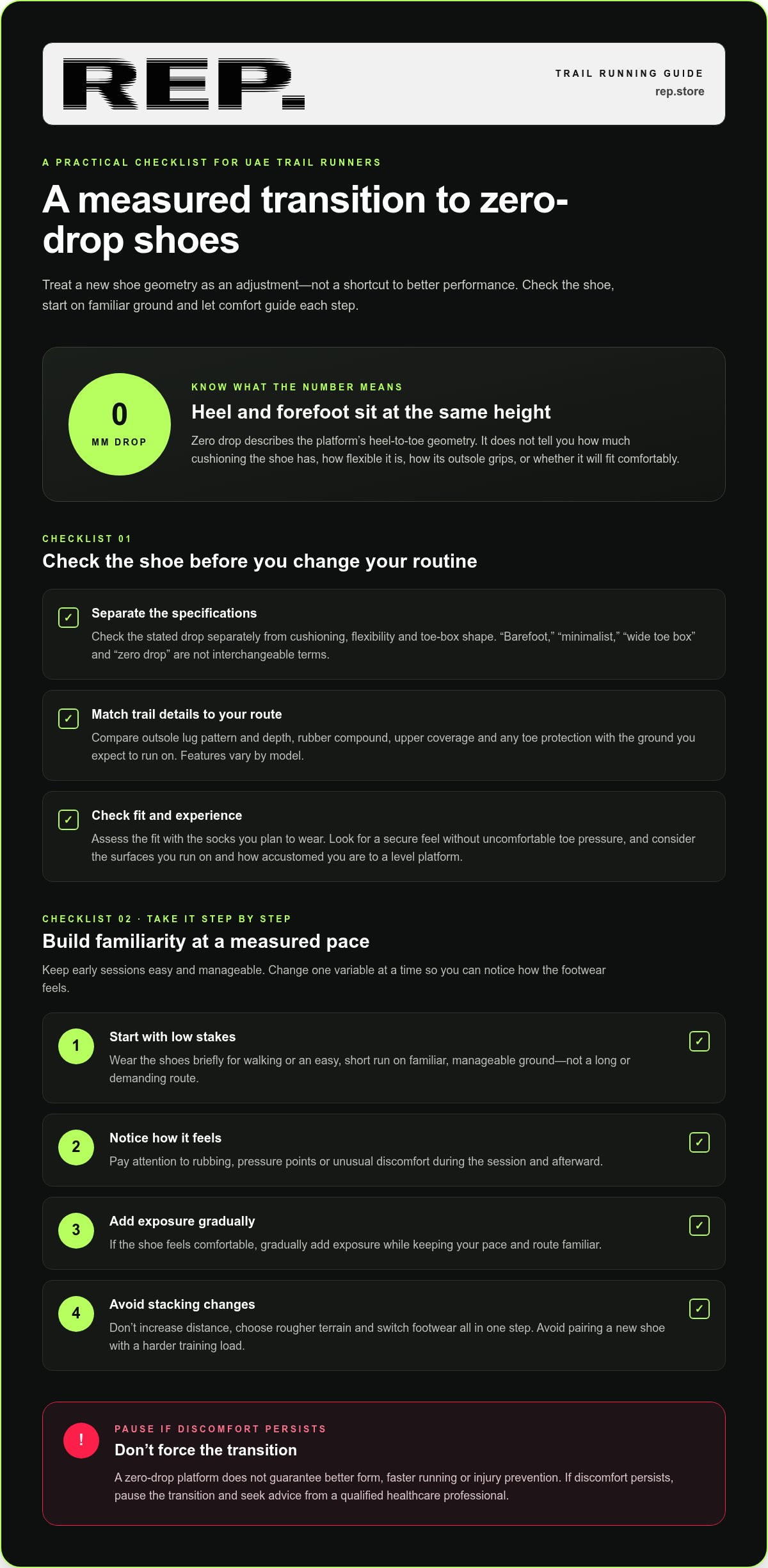
Start with low stakes. Assess the shoe before taking it onto a long or demanding route. Keep the first sessions easy, and let comfort guide whether you repeat or extend them. Avoid testing a new shoe on unfamiliar terrain while also increasing your training load.
- Wear the shoes briefly for walking or an easy, short run on familiar, manageable ground.
- Notice any rubbing, pressure points or unusual discomfort during the session and afterward.
- If the shoe feels comfortable, gradually add exposure while keeping your pace and route familiar.
- Change only one variable at a time. Don’t increase distance, choose rougher terrain and switch footwear all in one step.
Transition pace should reflect comfort, experience and individual response. There’s no need to match someone else’s timeline. A gradual approach makes it easier to recognise how the shoe feels without confusing footwear changes with the effects of harder or longer training.
Changing shoes doesn’t guarantee better running form, greater speed or injury prevention. A zero-drop platform changes shoe geometry; it doesn’t prescribe how you should run or prove that one style is right for every body. If discomfort persists, pause the transition and seek advice from a qualified healthcare professional rather than trying to run through it.
Keep the decision practical: choose a shoe you can wear comfortably for your intended use, then build familiarity at a measured pace. To explore performance footwear in the UAE, browse REP Store’s footwear range online or visit its location at Dubai Hills Mall.
How to compare zero-drop trail shoes with other running footwear
Compare specifications, not labels. “Barefoot,” “trail” and “wide” can appear together in a listing, but each describes a different feature or intended use. For zero drop trail running shoes UAE shoppers, separate heel-to-toe geometry from cushioning, fit, grip and protection. A product’s details matter more than the wording in its title.
Zero-drop and conventional-drop shoes: what changes?
Heel-to-toe drop is the height difference between the heel and forefoot. Zero drop means both sit at the same height; conventional running shoes have a raised heel, and traditional models often have an 8-12 mm drop. Neither geometry suits every runner. Compare the stated measurement with the shoes you’re used to and the running you plan to do.
| Feature | What to compare |
|---|---|
| Zero-drop geometry | Heel and forefoot have equal height; assess how this differs from your familiar footwear. |
| Conventional-drop geometry | Heel sits higher than the forefoot; check the listed drop rather than assuming a value. |
| Trail-running purpose | Designed for off-road running; inspect outsole, upper and protection details for the intended route. |
| Road-running purpose | Designed for paved running; compare its listed features with the surfaces you use. |
Drop describes shoe geometry; trail or road describes intended use. Neither tells you the full story about grip, cushioning, flexibility or fit. Check the product specifications for each separately, and don’t infer them from a “zero-drop” or “trail” label.
Trail grip, cushioning and protection are separate criteria
Look closely at the outsole pattern and product description. Lug shape and placement help show how a shoe is designed to engage with uneven ground, but the word “grip” alone doesn’t explain how a particular model will feel on your route. Treat cushioning as a separate choice: review the stated construction and consider what feels comfortable for your distance and experience.
Inspect upper construction for coverage and any stated toe protection. These details vary by model, so don’t assume every trail shoe offers the same protection. Check fit separately: consider toe space, heel hold and whether the shoe feels secure without uncomfortable pressure.
Trail-running shoes are designed for running on off-road routes; hiking footwear is designed for walking and hiking. Their intended activities and construction can differ, so compare the listed purpose rather than treating the categories as interchangeable.
Gym footwear has another job. If you’re comparing shoes for training sessions rather than running, the training shoe guide covers that distinct category. Keep your shortlist focused on the activity, then weigh each shoe’s specifications against your needs.
How to choose a pair for your UAE routes, fit and training
Start with your actual running routine, not an idealised one. Note how often you run, whether you mostly use maintained paths or expect rougher, uneven ground, and how long your typical outings are. Terrain varies across the UAE, so avoid choosing from broad assumptions about local routes. Match the shoe’s stated purpose and construction to the surfaces you plan to run.
Then consider your experience with zero-drop footwear. A shoe that suits a regular trail runner may not feel comfortable to someone accustomed to a raised heel. Fit and intended use matter just as much as geometry. For zero drop trail running shoes UAE shoppers, build a shortlist around route, training habits and personal comfort, not a trend or product title.
Match the shoe’s outsole and upper to the route
Look at outsole lugs and read the manufacturer’s grip description. Consider the surfaces you expect to encounter: a maintained path calls for different considerations than a rougher route with loose or uneven ground. Use the product’s stated purpose and construction as evidence rather than assuming every shoe labelled “trail” is designed for the same conditions.
Upper coverage and toe protection also vary by model. Review the product details for stated protective features, then decide whether they suit your planned routes. Don’t assume a trail shoe automatically has a reinforced toe or extensive upper coverage.
Road-to-trail versatility depends on the shoe’s actual design. If you expect to alternate between paved sections and off-road paths, look for a product description that addresses both uses. A trail label by itself doesn’t establish that a shoe will feel comfortable or appropriate on every surface.
Check fit before committing to longer runs
Try shoes with the running socks you expect to wear, where possible. Stand and walk in them. Your heel should feel secure, while your toes should have comfortable room to move. Notice any pressure across the forefoot, rubbing at the heel or contact that becomes uncomfortable as you walk. A shoe that feels wrong in a simple fit check is unlikely to become a better match just because it has the right label.
Use the retailer’s stated sizing information and compare it with your usual fit; don’t assume sizing is identical across models or brands. If you’re trying unfamiliar footwear, begin with a short, comfortable outing before considering longer runs. This lets you assess fit in use without making a major training change at the same time.
Build your decision around the route, the shoe’s listed specifications and a comfortable fit. Explore performance footwear through REP Store’s online range, or visit its location on the First Floor of Dubai Hills Mall.
Where to explore performance running footwear in the UAE
Make the final choice from evidence, not a label. Confirm the listed heel-to-toe drop and the shoe’s intended activity in its product details. Then compare its fit, outsole description and construction with your comfort, experience and planned routes. That process helps you evaluate zero drop trail running shoes UAE options without assuming that a particular style suits every runner or surface.
REP Store is a performance retailer in the UAE with online shopping and a physical location at Dubai Hills Mall. Its footwear range includes Saucony Running Shoes and Vivobarefoot shoes. A brand or category name alone doesn’t establish a shoe’s drop, trail purpose, cushioning or grip, so assess each shoe through its own specifications.
Explore performance footwear at REP Store
Dubai runners can visit REP Store on the First Floor of Dubai Hills Mall or browse its online store. The retailer offers Saucony Running Shoes and Vivobarefoot shoes. Use the individual product details to assess intended use and specifications rather than inferring trail or zero-drop features from the brand name.
For more local shopping context, explore this guide to sports stores in Dubai. It can help you understand the local retail setting as you compare performance footwear. Keep your decision criteria consistent, whether you’re browsing online or visiting in person: activity, stated drop, fit and suitability for your routes.
A final checklist before choosing
Before settling on a pair, review the individual product information alongside your own needs. This checklist keeps the decision focused:
- Confirm the listed heel-to-toe drop and the shoe’s stated intended activity.
- Check the outsole description against the surfaces you expect to run on.
- Review upper construction and any stated protection instead of assuming features from the trail label.
- Assess heel hold, comfortable toe room and pressure points using your running socks, where possible.
- Consider how familiar you are with the shoe geometry and begin with a short, comfortable trial if it’s new to you.
A product description can guide your comparison, but your route and fit complete it. If the shoe feels uncomfortable during a short trial, don’t ignore that signal simply because its specifications appear suitable. Prioritise a match you can wear comfortably for the activity you intend to do.
The right choice balances adaptation, terrain and fit, not a label. Explore REP Store’s performance footwear online at REP Store, or visit the Dubai Hills Mall location to discover its footwear range.
Make your next footwear choice with confidence
Your next step isn’t to chase a shoe label. Choose footwear that supports the running you want to do now, while giving you room to adapt at a pace that feels right. Before you browse, write down your priorities: the routes you run most, the fit you find comfortable and whether you’re ready to try a level platform. That short list can keep product claims from distracting you from what matters.
Use the same criteria as you explore zero drop trail running shoes UAE options. Compare each shoe’s details, and stay open to a different drop if it better suits your current experience. The best choice is one you can use comfortably and confidently, not one that promises a perfect running style.
REP Store offers performance footwear online and at its Dubai Hills Mall store, including Saucony Running Shoes and Vivobarefoot shoes. Explore performance footwear at REP Store and take your next step with a clearer idea of what fits your goals.
Frequently Asked Questions
Is zero drop the same as barefoot running?
No. Zero drop describes a shoe’s heel-to-forefoot height, while barefoot running means running without shoes. A zero-drop shoe still has a sole and may include cushioning or a structured upper. For zero drop trail running shoes UAE shoppers, the useful distinction is that a level platform doesn’t tell you how minimal the rest of the shoe feels. Check each feature separately before deciding whether it suits you.
Can zero-drop shoes improve running performance?
Not automatically. A change in shoe geometry doesn’t guarantee faster times, better form or fewer injuries. Performance depends on multiple factors, including training, recovery, experience and whether the shoe feels comfortable for your intended runs. If you’re preparing for a particular event, judge footwear in the context of your training rather than expecting a shoe change to create an instant improvement. Track how it feels across normal sessions.
Are zero-drop trail shoes waterproof?
No, zero drop doesn’t indicate waterproofing. It describes platform geometry, not a shoe’s resistance to water. Waterproofing, if present, should be stated as a separate product feature. Read the individual specifications and don’t infer protection from terms such as “trail,” “minimalist” or “barefoot.” If your route may involve wet ground, consider the listed materials and intended conditions, and remember that water protection can vary between models.
How much toe room should trail-running shoes have?
There isn’t one universal measurement that suits every foot and shoe. Your toes should be able to spread and move without pressing hard against the front, especially when you walk downhill or stop suddenly. Try the shoes with your usual running socks and check for pressure at the sides as well as the toe tips. A roomy feel shouldn’t come at the cost of the shoe slipping at the heel.
Can I wear trail-running shoes for everyday use?
Yes, if they feel comfortable for the activities and surfaces you use day to day. Keep in mind that a trail outsole may feel more pronounced on smooth indoor floors or pavement than a road-shoe sole. That’s a design difference, not a sign that the shoe is unsuitable. For regular everyday wear, consider whether the shoe’s fit, weight and tread feel comfortable during the walking you actually do.
How often should trail-running shoes be replaced?
There’s no reliable calendar interval that applies to every runner. Check their condition regularly, especially if you run often or across varied surfaces. Look for worn or uneven outsole tread, damaged upper material, changes in cushioning feel, or a fit that no longer feels secure. Keep an eye on comfort too: if a familiar shoe starts to feel noticeably different, reassess it rather than relying on appearance alone.


