

How to Choose the Right Barbell for Olympic Lifting: The Athlete’s Guide 2026

Your barbell is a precision instrument, not a blunt object. If you treat it like a commodity, you are sabotaging your Clean & Jerk before you even grip the steel. Settling for a bar with poor rotation is a calculated risk that often results in stalled PRs or chronic wrist injuries. Understanding how to choose the right barbell for Olympic lifting is the only way to ensure your equipment matches your athletic ambition. If the sleeve does not spin with surgical precision, you are fighting the hardware instead of the weight.
It is frustrating to invest in gear only to find it lacks the necessary whip or fails to meet IWF standards. We know the confusion surrounding tensile strength ratings and PSI can make the process feel like a gamble. This guide cuts through the noise to explain exactly what technical specifications matter for your performance. You will learn how to identify a bar with the perfect balance of knurling and rotation, and where to secure premium Nike Strength equipment right here in the UAE. We provide the technical roadmap to ensure your next lift is supported by world class engineering.
Key Takeaways
- Identify why shaft diameter and elastic whip are the non-negotiables for high-velocity Clean & Jerk performance.
- Master how to choose the right barbell for olympic lifting by decoding the rotation systems that protect your wrists from injury.
- Learn the critical tensile strength threshold that separates professional-grade steel from dangerous, budget alternatives.
- Understand how IWF standards impact your training results and why equipment precision is a primary driver of power transfer.
- Discover the most efficient way to source elite Nike Strength equipment within the UAE for your home or commercial gym.
The Anatomy of an Olympic Barbell: Why Precision Matters
An Olympic barbell is not just a piece of gym equipment. It is a highly engineered interface for power transfer. If you are serious about your performance, you cannot treat this purchase as a commodity. Understanding how to choose the right barbell for olympic lifting starts with the realization that these bars are designed for high-velocity movements. They aren't static. They are dynamic tools built to store and release kinetic energy throughout the lift. If your bar doesn't behave predictably, your technique will suffer.
The shaft acts as a spring. During the transition from the floor to the catch, the bar flexes under load. This "whip" is essential for elite performance. It allows the athlete to use the bar's elastic energy to drive out of the bottom of a clean. If the bar is too stiff, you lose this mechanical advantage. If it's too soft, the oscillation becomes unpredictable and dangerous. Precision engineering ensures the whip is consistent every time you step onto the platform.
Sleeve rotation is your primary safety feature. In explosive movements like the Snatch, the plates must spin independently of the shaft. If the rotation is sluggish, the inertia of the heavy plates transfers directly into your wrists and elbows. This often leads to chronic tendonitis or acute joint failure during the turnover. High-performance bars use sophisticated needle bearings to ensure this rotation is frictionless and immediate. Without it, you are fighting the equipment instead of the weight.
Olympic vs. Standard Barbells: A Non-Negotiable Choice
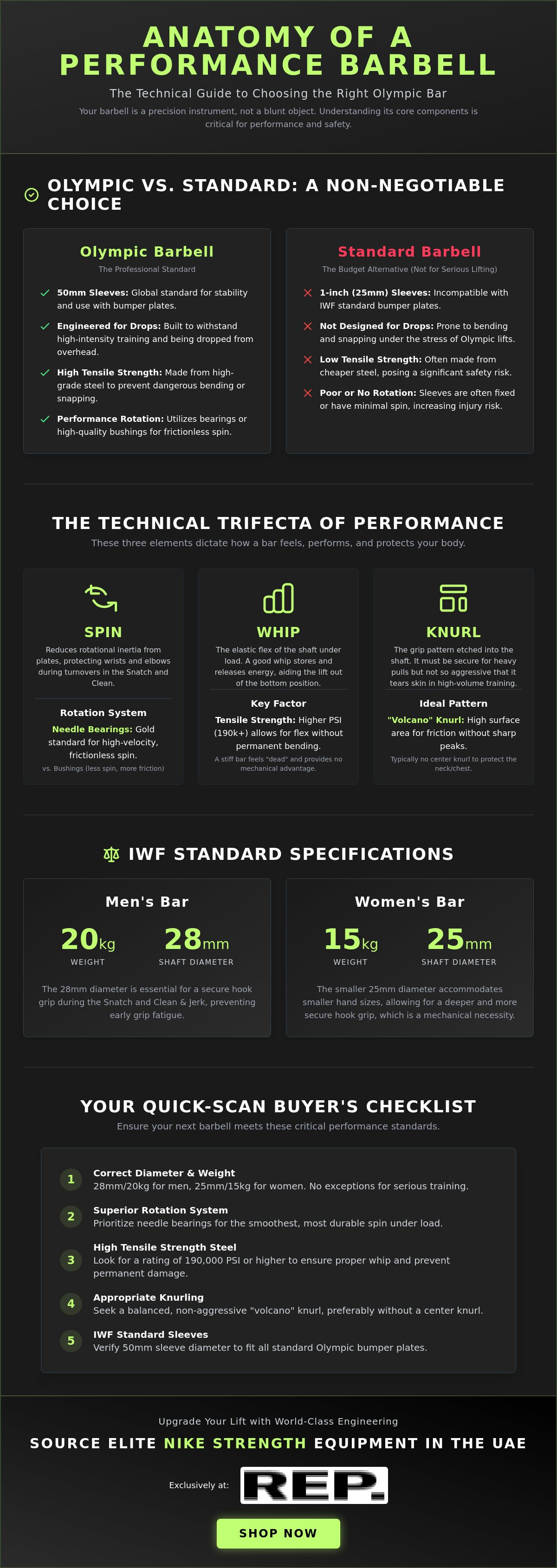
Standard 1-inch bars have no place in a serious training environment. They are toys. A true Olympic bar utilizes 50mm sleeves, which are the global industry standard for stability and weight distribution. These sleeves allow for the use of bumper plates, which are designed to be dropped. Standard bars lack the internal architecture to survive drop stress. They will bend or snap when dumped from overhead. Adhering to Olympic weightlifting standards is the only way to ensure your equipment survives the rigors of high-intensity training. Don't risk your safety on cheap, non-standard steel.
The 28mm Standard: Why Diameter Dictates Grip
Shaft diameter is a critical technical spec that many athletes overlook. A 28mm shaft is the international standard for men's lifting. It facilitates the hook grip, which is essential for the Snatch and Clean & Jerk. Thicker bars, often found in powerlifting or general fitness settings, are built for stability during slow movements like the squat. In Olympic lifting, a thicker bar prevents the necessary hand wrap for a secure grip. This leads to early grip fatigue and missed lifts.
- Men's Standard: 20kg weight with a 28mm shaft diameter.
- Women's Standard: 15kg weight with a 25mm shaft diameter.
The 25mm shaft for women is about mechanics, not just weight. A female athlete using a 28mm bar is at a significant mechanical disadvantage. The smaller diameter allows for a deeper hook grip. This ensures the bar stays secure during the most explosive part of the pull. Precision in diameter leads directly to precision in performance.
Spin, Whip, and Knurl: The Technical Trifecta of Performance
Performance is won or lost in the milliseconds between the pull and the catch. If the anatomy of the bar provides the structure, then the spin, whip, and knurl provide the soul. Understanding how to choose the right barbell for olympic lifting requires a deep dive into how these three variables interact with your biomechanics. A bar that fails in any of these categories isn't just an inconvenience; it's a ceiling on your potential. You can't out-train a bar that refuses to move with you.
Knurling is the primary interface between your intent and the weight. For Olympic lifting, you need a "volcano" pattern. This structure provides a massive surface area for friction without the sharp, skin-tearing peaks of a "mountain" knurl. You need a grip that feels like it's glued to your palms during a heavy Snatch, but won't turn your hands into raw meat during high-volume training. Most specialized Olympic bars omit the center knurl. This is a deliberate design choice to protect your neck and chest during the rack position of the Clean. If a bar has aggressive center knurling, it's likely a powerlifting bar in disguise.
Bearings vs. Bushings: Choosing Your Rotation
The rotation system is the most expensive part of a barbell for a reason. Needle bearings are the gold standard. They consist of small rollers that allow the sleeve to spin at high velocities under heavy loads. This is non-negotiable for the Snatch. If you use a bar with bushings, which rely on friction-fed sleeves, the rotation will lag. That lag forces your wrists to compensate for the plate's inertia. Over time, this is a recipe for injury. High-performance bearing bars require minimal but regular maintenance; a few drops of 3-in-1 oil will keep the turnover surgical for years. Securing a bar with this level of precision is easy when you browse the Nike Strength collection.
Mastering the Whip: Elasticity as a Performance Tool
Whip is the bar's ability to store elastic energy. When you drive out of the hole in a Clean, the bar flexes and then snaps back. If you time this oscillation correctly, the bar actually feels lighter as it moves upward. Recent biomechanical analysis of Olympic barbells confirms that the physical properties of the bar directly influence the kinetic chain of the lifter. A stiff bar is a dead bar. It hits you like a ton of bricks at the bottom of a squat and offers zero assistance on the way up. The 28mm diameter of an Olympic shaft is specifically chosen to optimize this whip. It provides the perfect balance of tensile strength and "spring" that elite athletes demand.
- Needle Bearings: Essential for fast, frictionless turnover in the Snatch and Clean.
- Whip: The "spring" in the steel that assists the lifter during the transition phases.
- Volcano Knurl: Provides maximum grip security with minimal skin damage.
Don't settle for a hybrid bar if your goal is the platform. A jack-of-all-trades bar is a master of none. It will be too stiff for heavy cleans and too slow for fast snatches. Invest in the specific technology that matches your movement.
Tensile Strength and Durability: The Science of "Never Snapping"
Do not gamble with metallurgy. A snapping barbell is a catastrophic failure that can end a career in a fraction of a second. When you are evaluating how to choose the right barbell for olympic lifting, steel integrity is your absolute baseline. If the manufacturer hides their PSI ratings, they are hiding a liability. High-performance lifting requires steel that is strong enough to handle massive loads but elastic enough to return to its original shape every single time.
Yield strength is the metric that determines when a bar will permanently bend. A "banana" bar is useless for the Snatch or Clean & Jerk. You need a bar that possesses a high "memory" capacity. This means the steel flexes under the stress of a heavy pull and snaps back to perfectly straight the moment the tension is released. Cheaper bars often fail this test after just a few months of heavy drops, leaving you with a crooked, dangerous piece of equipment.
The PSI Metric: Measuring the Integrity of Your Steel
Tensile Strength is the maximum stress steel can withstand before breaking. For elite Olympic lifting, the industry sweet spot lies between 190,000 and 215,000 PSI. Anything under 190k PSI is a risk for high-volume training environments. However, be wary of budget brands claiming extremely high PSI numbers. Steel that is too hard becomes brittle; it loses the ability to whip and can shatter under impact rather than flexing. You are looking for a balance of toughness and elasticity, not just the highest number on a spreadsheet.
Coatings and Corrosion Resistance in the UAE
In the humid coastal climate of Dubai, your choice of finish is a matter of survival for your gear. Bare steel is a maintenance nightmare. It will begin to oxidize and rust within weeks if it isn't oiled daily. Hard Chrome is a traditional, highly durable choice that offers a classic feel and solid protection. It stands up well to the friction of plates sliding on and off the sleeves.
Cerakote has become the modern standard for maximum oxidation resistance. It is a ceramic-based coating that provides a layer of protection far superior to traditional zinc or chrome. If you are building a home gym in the UAE where climate control might fluctuate, Cerakote is the logical choice to prevent your investment from turning into a rusted relic. It also allows for aesthetic customization without sacrificing the tactile feel of the knurling. Quality is a one-time investment. Buying a professional-grade bar today prevents you from buying a replacement next year.
- 190k-215k PSI: The optimal range for durability and whip.
- Cerakote: The best defense against Dubai’s humidity.
- Hard Chrome: A reliable, high-durability finish for commercial boxes.
Matching the Barbell to Your Training Environment in Dubai
Your training environment dictates your equipment requirements. A home gym in a Dubai villa has vastly different needs than a high-traffic commercial box in Al Quoz. If you are the only person using the bar, you can prioritize specific feel and whip. In a commercial setting, durability is the only metric that matters. The bar will be dropped hundreds of times a day by lifters with varying levels of technical proficiency. You need a workhorse that maintains its straightness and spin under constant abuse. Understanding how to choose the right barbell for olympic lifting means acknowledging these situational demands before you swipe your card.
Space is often a limiting factor in residential setups. While a standard 7ft Olympic bar is the goal, some athletes consider shorter bars to save room. This is usually a mistake. Shorter bars often lack the standard sleeve length and spacing required for a proper Snatch grip. Unless you are focused strictly on technique work with light weights, stick to the IWF standard dimensions. Consistency in your equipment translates to consistency in your movement patterns. If the bar feels different every time you switch environments, your progress will stall.
The Foundation: Footwear and Barbell Interaction
The barbell is only half of the performance equation. Your connection to the floor is just as critical. The stability provided by R.A.D One Shoes ensures that the force you generate actually moves the bar instead of being absorbed by a soft sole. High-quality lifting shoes provide a firm heel drop. This allows for a more vertical torso during the pull and a more stable base when catching a heavy Clean. If your footwear is mushy, you lose the tactile feedback from the bar. You need to feel the oscillation of the steel through your entire kinetic chain. Precision gear requires a precision foundation.
Sourcing Premium Gear in the UAE
Importing heavy steel is a logistical nightmare and a financial drain. High shipping costs and potential damage during transit make local procurement the only logical choice for serious athletes. Visiting a physical sports store in Dubai Hills Mall allows you to do what no website can: test the knurl. You need to feel the aggressiveness of the grip and the smoothness of the sleeve rotation in person. For commercial gym owners, local sourcing also means faster replacement cycles and better B2B support within the Emirates. Don't wait weeks for a shipment when professional grade equipment is available down the road.
Stop settling for subpar equipment that limits your ceiling. You deserve a bar that matches your dedication. You can find the full range of professional lifting gear when you shop the Nike Strength collection at REP Store today.
Why Nike Strength at REP Store is the Ultimate Lifting Upgrade
Knowledge is a liability if you don't act on it. You now understand the technical variables of how to choose the right barbell for olympic lifting, but the market is flooded with mediocrity. Most athletes fail because they compromise on the hardware that connects them to the weight. Nike Strength represents a shift in the industry, moving away from generic manufacturing toward surgical engineering. This isn't just another brand entry into the gym space. It is a calculated application of material science to the sport of weightlifting. Settling for a lesser bar after learning these standards is a choice to limit your own ceiling.
Nike Strength barbells solve the primary conflict in equipment design: the balance between elite spin and long-term durability. Many competition bars are too delicate for daily abuse, while many training bars are too sluggish for a fast Snatch. Nike has engineered a middle ground that refuses to compromise. These bars offer the frictionless rotation of high-end needle bearings with the ruggedness required for a high-volume commercial box or a humid home gym in the Emirates. REP Store curates this range because our commitment to "Everyday Performance" requires gear that doesn't fail when the load gets heavy.
The Nike Strength Advantage
Engineering excellence is the baseline here. Nike applies the same technical precision to their hardware that they do to their world-class footwear. The tactile feedback of a Nike Strength bar is distinct; the knurling is aggressive enough for a secure hook grip but refined enough for multiple sessions per week. This gear functions as a comprehensive ecosystem. When you pair a Nike bar with their calibrated bumper plates, you ensure that the bar's oscillation and the plates' stability work in total harmony. You aren't just buying a tool. You are investing in a system designed for PRs.
Your Performance Hub in Dubai Hills Mall
Stop guessing based on digital photos. The only way to truly understand a bar's knurl and spin is to experience it. Our team at the REP Store in Dubai Hills Mall understands the mechanics of your lift. We don't just sell equipment; we provide expert consultation to help you decide between specialized Olympic bars and multipurpose hybrid options. We know the risks of the UAE climate and can guide you toward the finishes that will survive the local environment.
Immediate availability is the ultimate luxury. Why wait weeks for international shipping and risk damage in transit? We have the stock ready for your home gym or commercial facility right now. You can test the gear, verify the rotation, and take it home the same day. Precision training demands precision equipment. It is time to stop fighting your gear and start trusting it. Explore the Nike Strength collection at REP Store and secure the instrument your performance deserves.
Secure Your Competitive Edge
The difference between a stalled lift and a new PR often comes down to the quality of the steel in your hands. Mastering how to choose the right barbell for olympic lifting is about moving beyond brand hype and into the territory of surgical precision. You now have the technical roadmap to evaluate needle bearings, elastic whip, and tensile strength with absolute certainty. High-velocity movements demand equipment that moves with you, not against you. Don't let a mediocre bar become the bottleneck in your athletic progression.
As the exclusive UAE retailer for Nike Strength, REP Store provides the professional-grade hardware required to dominate the platform. Visit our location in Dubai Hills Mall for hands-on testing of the latest gear. We also offer specialized B2B procurement expertise for commercial fitness facilities looking to upgrade their standards. Every rep matters. Ensure your equipment is as dedicated to the lift as you are. Stop fighting your hardware and start trusting your instrument.
Upgrade your gym with Nike Strength Equipment at REP Store today. Your next breakthrough starts here.
Frequently Asked Questions
What is the difference between an Olympic bar and a powerlifting bar?
Olympic bars are 28mm in diameter with needle bearings for fast spin and significant whip. Powerlifting bars are thicker, usually 29mm, stiffer, and use bushings to prioritize stability during slow, heavy lifts like the bench press. The absence of a center knurl on many Olympic bars also protects your skin during the rack position. Choosing the wrong bar for explosive lifts isn't just inefficient; it's a risk to your joints.
How much should a high-quality Olympic barbell cost in Dubai?
A professional grade barbell in the UAE is a long term investment that reflects its engineering quality. While budget bars exist, they often fail the durability and rotation tests required for the Snatch. High-end, IWF-standard bars from premium brands represent a higher upfront cost but eliminate the need for frequent replacements. Investing in quality once is always more efficient than buying cheap steel twice. You are paying for safety and performance, not just a label.
Do I need needle bearings or are bushings enough for a beginner?
You should prioritize needle bearings from day one if your goal is technical proficiency in weightlifting. While bushings are cheaper, they lack the immediate, frictionless rotation needed to protect your wrists during the turnover. Beginners often think they can earn better equipment later, but learning on a slow bar creates bad technical habits. If you are serious about the sport, start with a bar that moves at the speed of your ambition.
What does Barbell Whip actually feel like during a lift?
Barbell whip feels like a rhythmic oscillation that assists you during the transition from the hole to the standing position. It isn't just a bend; it is stored elastic energy that makes the weight feel lighter when timed correctly. If you use a stiff bar, the weight hits you like a dead stop. A bar with proper whip provides a springy feedback that is essential for heavy cleans and jerks.
How do I maintain my Olympic barbell to prevent rust?
Preventing rust in the UAE humidity requires a consistent routine of brushing and oiling your bar. Use a nylon brush to remove chalk and skin particles from the knurling after every session. Apply a light coat of specialized barbell oil once a week to create a protective barrier against oxidation. If you neglect this, even high-quality steel will eventually succumb to the coastal air in Dubai. Maintenance is the price of equipment longevity.
Is a 20kg bar too heavy for a woman starting Olympic lifting?
A 15kg bar with a 25mm shaft is the international standard for women and is the correct choice for starting. The primary issue isn't the 5kg weight difference, but the shaft diameter. A 25mm bar allows for a more secure hook grip for those with smaller hands. Starting with the wrong diameter sabotages your grip strength and technical development. Always match the equipment to your specific biomechanical needs from the very first rep.
Can I use an Olympic barbell for deadlifts and squats as well?
You can use an Olympic bar for squats and deadlifts, but it is not the optimal tool for those movements. The whip that helps in a Clean can make a heavy squat feel unstable as the bar oscillates on your back. Additionally, heavy deadlifts can eventually affect the calibration of a precision weightlifting bar. Ensure you understand how to choose the right barbell for olympic lifting that can handle occasional powerlifting loads if you are a hybrid athlete.
Why is the knurling different on Olympic bars compared to gym bars?
Olympic knurling is designed to provide maximum grip security without the sharp, skin-tearing peaks found on powerlifting bars. Most specialized bars use a volcano pattern that offers high friction for the hook grip. They also typically omit the center knurl to prevent abrasions on the neck and collarbones during the catch. This specialized texture ensures you can maintain a high training volume without destroying your hands or chest during the turnover.


