

TRNR High-Density Foam Roller UAE: How to Choose the Right One

A firmer roller isn’t automatically the better choice. A TRNR high density foam roller UAE athletes consider should suit their pressure tolerance and recovery goals, not just sound more powerful on a product label. If you’re new to foam rolling, it’s understandable to wonder whether a high-density roller will feel too intense. Density can influence how firmly a roller holds its shape under your weight, but your position, body weight and technique also affect the pressure you feel.
This guide explains how firmness can affect comfort, how to match a roller to your training and experience, and how to use it sensibly as part of a UAE fitness routine. It also looks at the TRNR Tactile Roller and TRNR Traction Roller, so you can compare their intended feel without treating density as the only deciding factor.
REP Store carries TRNR as part of its performance training range, with a physical location at Dubai Hills Mall and an online store. Start by identifying what feels manageable and fits your routine, then compare the available product details.
Key Takeaways
- High density describes firmness, not overall quality. The pressure you feel also depends on the body area, your position and your technique.
- Move slowly and adjust how much body weight you place on the roller. Avoid repeatedly rolling quickly over one spot.
- Compare firmer and softer rollers by comfort and intended use, rather than assuming one suits every training routine.
- When choosing a TRNR high density foam roller UAE athletes can use, consider your recovery goal and pressure preference, then review the product specifications and care guidance.
- Explore TRNR performance training gear through REP Store, at Dubai Hills Mall or online.
What High Density Means for TRNR Foam Rollers in the UAE
“High density” describes how much foam material is packed into a given volume. In everyday shopping, the label often suggests a firmer, less yielding feel. Density and firmness aren’t identical, though, and firmness alone doesn’t prove a roller is better made. Construction and surface design also affect how a roller feels. When considering a TRNR high density foam roller UAE shoppers can find, review the product details rather than assuming a specific firmness rating from the label.
Foam roller density describes the amount of material packed into the foam; it doesn’t, by itself, determine quality or the pressure you’ll feel. Pressure depends on where you roll, how you position your body, how much weight you place on the roller, your sensitivity and your experience. A foam roller is a tool for self-massage. Foam rolling offers a neutral introduction to the tool, but it shouldn’t be treated as medical care or a guaranteed route to recovery.
How does a high-density foam roller feel?
As a general category, a firmer roller tends to give less under your body weight than a softer one. Contact may feel more intense, especially on sensitive areas or if you’re unfamiliar with rolling. Your position matters: leaning heavily into the roller increases pressure, while supporting more of your weight with your hands or feet reduces it. Start gently, move with control and ease off if the sensation becomes sharp or uncomfortable. Pressure should feel manageable, not like something to push through.
What can a foam roller do after training?
After exercise, rolling gives you a way to apply measured pressure to muscles as part of a cool-down or personal comfort routine. Move gradually over the area instead of rushing back and forth over one spot. Adjust your position and the amount of weight you place on the roller to keep the sensation comfortable. Some people use rolling for a temporary sense of ease or mobility, but results vary. It doesn’t prevent injury, guarantee faster healing or replace medical assessment and treatment when pain or injury is a concern.
The useful question isn’t simply whether a roller is labelled high density. Consider whether its feel and your technique let you apply pressure comfortably for your intended routine. Start conservatively, notice how your body responds and treat the roller as one recovery tool, not a cure-all.
How Density, Pressure and Technique Change the Foam-Rolling Experience
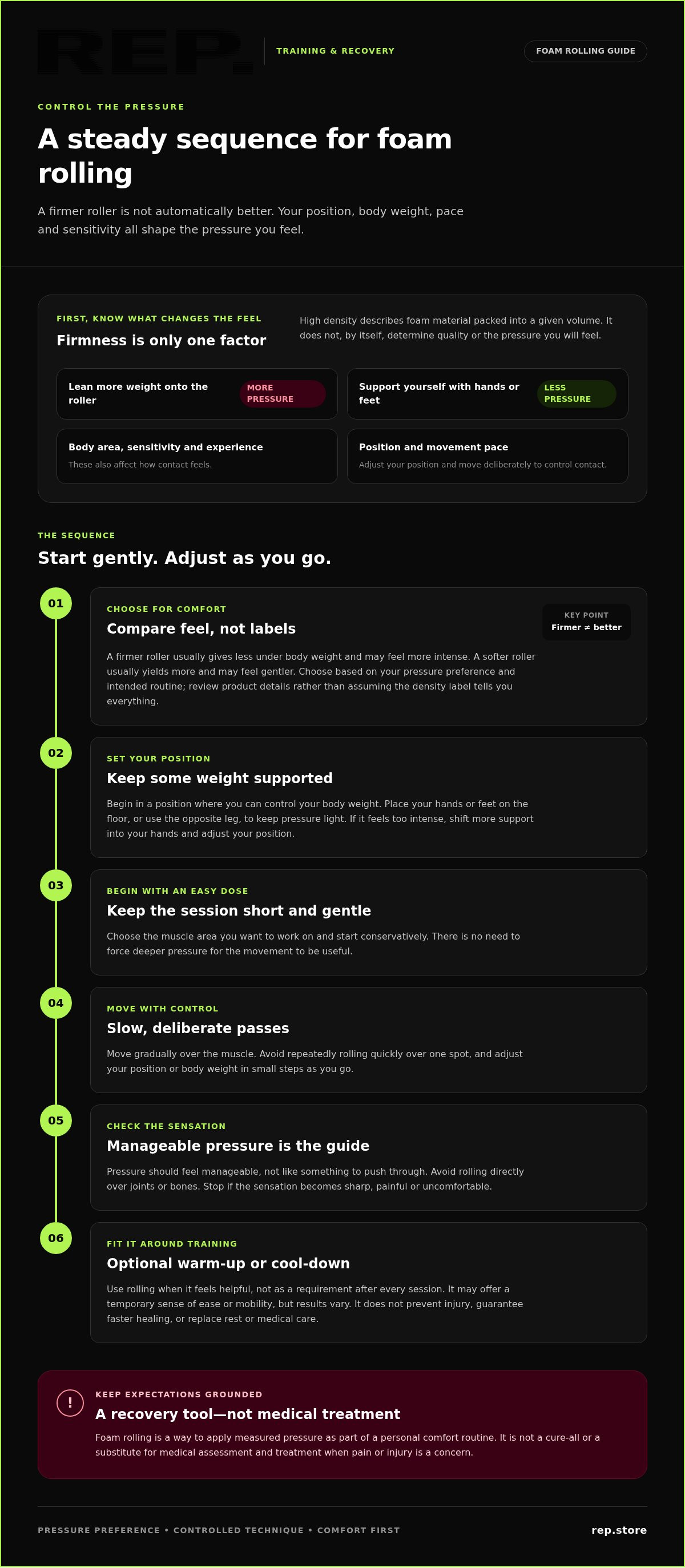
A firm roller doesn’t set the pressure on its own. Your body weight, position and movement speed all affect how much force reaches the muscle. Leaning heavily onto the roller increases pressure; supporting yourself with your hands or feet reduces it. Move slowly and deliberately so you can control contact and adjust as you go.
Roller firmness alone doesn’t determine comfort; your position, pressure and pace shape the experience too. The same applies when choosing a TRNR high density foam roller UAE users may consider: begin in a position that lets you control your weight, then make small adjustments based on how the pressure feels.
How should beginners manage pressure?
Start with a short, gentle session. Place your hands or feet on the floor to support some of your weight, or use the opposite leg to keep pressure light. Move slowly over the muscle rather than repeatedly rolling fast across one point. Avoid rolling directly over joints or bones, and stop if the sensation becomes sharp, painful or uncomfortable. You don’t need to force deeper pressure for the movement to be useful.
Positioning is a simple way to scale intensity. If a position puts too much weight on the roller, shift more support into your hands and try again. As you get used to the movement, adjust gradually rather than suddenly increasing pressure.
How can athletes fit rolling around training?
Foam rolling can be an optional part of a warm-up or post-training routine. Choose the muscle area you want to work on and adjust your position to keep contact controlled. The Harvard Health Publishing overview discusses how foam rolling may reduce muscle and tissue soreness, but rolling isn’t a substitute for rest or medical care, and it won’t guarantee a particular recovery result.
Keep the bigger picture in view. Consistent training, adequate rest and mobility work matter more than relying on any single tool. Use rolling when it feels helpful, not as a requirement after every session. If you’re exploring performance training gear, you can also browse REP Store’s performance training range as part of planning your routine.
High-Density vs Softer Foam Rollers: Which Suits Your Training?
Choose according to your pressure preference, not the assumption that firmer means better. The comparison below covers general foam roller categories, not specific TRNR models. A roller’s length, diameter and surface design can affect its feel, as can how you position your body. For example, a textured surface may feel different from a smooth one, while shifting your weight can make the same roller feel gentler or firmer.
| General category | Firmness and likely pressure feel | Beginner comfort | Typical preference |
|---|---|---|---|
| Firmer roller | Usually yields less under body weight and may feel more intense. | Can feel strong at first, especially if you’re pressure-sensitive or new to rolling. | People who prefer firmer, more focused pressure and can control their positioning. |
| Softer roller | Usually yields more and may feel gentler under comparable positioning. | May feel easier to approach while learning how to move and manage pressure. | New users or people who prefer a less intense sensation. |
These are tendencies, not guarantees. The body area, how much weight you place on the roller and your pace all influence pressure. Exercise guidance continues to discuss the evidence on foam rolling, including this overview from the American Council on Exercise. Don’t choose a roller based on claims of superior recovery outcomes. Pick one you can use comfortably and with control.
When might a firmer roller suit you?
A firmer roller may suit you if you already know you prefer stronger pressure and can adjust your position without losing control. That preference doesn’t make it a more advanced choice or mean you’ll get better recovery results. If contact feels too intense, support more of your weight with your hands or feet, or choose a gentler option. Comfort matters more than choosing the firmest roller available.
When might a softer roller be more comfortable?
A softer feel can be a sensible starting point if you’re new to rolling or want gentler contact on pressure-sensitive areas. It gives you room to practise balance, positioning and controlled movement before deciding whether you want stronger pressure. Your fitness level doesn’t dictate which firmness you should choose. If a softer roller helps you use the tool comfortably, it may be a practical fit.
If you’re comparing a TRNR high density foam roller UAE shoppers may find, use these categories as a starting point rather than assuming a particular model’s exact feel. Consider your comfort preference, intended use and technique together, and review the product information.
How to Choose and Use a TRNR High-Density Foam Roller in the UAE
Start with your routine, not the density label. Use these steps to identify what you need, compare product details and decide where the roller will fit into your training week.
- Define your goal. Decide which muscle areas you intend to roll and whether you’ll use the roller at home, in the gym or both. Your intended use can help you weigh the product’s size and portability against the space you have available.
- Assess your pressure preference. Consider whether you already enjoy firm pressure or would rather begin gently. Choose an option you can use with control. A high-density label alone doesn’t tell you whether the feel will suit you.
- Review the product specifications. Before buying a TRNR high density foam roller UAE shoppers are considering, look at the product details for dimensions, material and surface design. Read the care guidance too. These details help you assess how the roller may fit your space and intended use.
- Plan where you’ll use and store it. Consider whether it will stay in a home workout area, move between home and gym, or need to fit into limited storage. In the UAE, avoid leaving foam equipment in direct sunlight or very hot areas unless the product’s care guidance says that’s suitable. Heat and sunlight can affect many foam products, but care requirements vary, so follow the instructions for the specific roller.
What should you check before buying a roller?
Compare the available product information for dimensions, material, surface and care guidance. Check whether the roller’s size works for your storage space and the muscle areas you plan to target. Density is one selection factor, not a complete measure of comfort or suitability. Don’t infer a specification from the product name or category.
How can you start a simple rolling routine?
Choose one muscle area and use slow, controlled passes at a comfortable pressure. Keep your first sessions brief and adjust your position if contact feels too intense. Stop if symptoms worsen or feel unusual. Rolling isn’t medical treatment; seek qualified clinical support for persistent or acute pain.
Explore performance training gear for your routine in the REP Store online store.
Where to Explore TRNR Training Gear in Dubai and Across the UAE
The right roller matches your pressure preference and feels manageable in use. If you’re comfortable with firmer, more focused pressure, a high-density option may suit your routine. If you’re new to rolling or prefer gentler contact, starting with less intensity can make it easier to practise positioning and control. Neither choice is automatically better for every athlete.
Is a high-density roller the right fit for your routine?
Consider your experience, intended use and comfort, not just the density label. Before choosing a TRNR high density foam roller UAE shoppers may be comparing, review the product details, including dimensions, material, surface information and care instructions. These specifics help you judge whether the roller suits your training space and routine. For more context on shopping locally, read REP Store’s Dubai performance shopping guide.
Explore performance training gear at REP Store
REP Store is a Dubai performance retail destination with a physical location at Dubai Hills Mall and an online store. It carries TRNR as part of its performance training range, alongside other performance-focused training equipment and accessories. Review the product information to understand the specifications of an individual roller.
Before you decide, connect the choice to how you’ll use it. Think about whether you want firmer pressure, how familiar you are with foam rolling, which areas you intend to work on and where you’ll store the roller. A high-density label alone can’t answer all of those questions. Compare the available product information with your needs, then choose an option that feels comfortable and practical for your routine.
Explore the REP Store range to browse performance training gear and accessories for your routine.
Choose Pressure That Fits Your Routine
The right roller isn’t the one with the toughest label. It’s one whose pressure you can control and whose feel suits your experience, comfort and intended use. Density offers a starting clue, while body position, weight distribution, pace and surface design also shape the experience. No firmness category is automatically right for every athlete.
Before choosing a TRNR high density foam roller UAE option, decide whether you prefer firmer or gentler contact, then review the product details for dimensions, material and care. Start gradually, use controlled movements and adjust your position instead of forcing deeper pressure. Treat rolling as an optional self-massage tool, not a substitute for rest or clinical care.
REP Store carries TRNR in its performance training range and has a physical location at Dubai Hills Mall, as well as an online store. Explore performance-focused training gear and choose what fits your routine.
Explore performance training gear at REP Store and choose gear that fits your routine.
Frequently Asked Questions
What does high density mean in a foam roller?
High density generally describes foam with more material packed into a given volume, and the term is often associated with a firmer feel. It doesn’t automatically mean better quality or tell you exactly how much pressure you’ll feel. Your position, weight distribution, the area being rolled and the roller’s surface can all affect the sensation. Check the product’s specifications rather than relying on the label alone.
Is a high-density foam roller suitable for beginners?
It can be, provided you can manage the pressure comfortably. Beginners can support more of their body weight with their hands or feet, move slowly and stop if the sensation becomes sharp or unpleasant. A gentler roller may feel easier while you learn positioning and control. Choose according to comfort and the pressure you can regulate, not how advanced the roller appears.
Can a foam roller help with post-workout muscle tightness?
Foam rolling applies controlled pressure to muscles and may feel useful as part of a post-training routine. Some people use it for temporary comfort or a greater sense of ease in movement, but responses vary. It isn’t a guaranteed recovery method, a way to prevent injuries or a treatment for an underlying condition. Keep pressure manageable, and consider rest and appropriate clinical advice if tightness persists or comes with concerning symptoms.
How do I use a high-density foam roller safely?
Begin in a comfortable position and move slowly over the muscle area you intend to roll. Use your hands, feet or other support to reduce the weight pressing onto the roller. Don’t roll directly over joints or bones, and stop if you feel sharp pain, unusual symptoms or worsening discomfort. Don’t force a stronger sensation. If pain is acute or persistent, seek advice from a qualified healthcare professional rather than relying on rolling.
How often should I use a foam roller after training?
There isn’t one schedule that suits every person or training plan. Treat foam rolling as an optional part of your warm-up or post-workout routine, and let comfort and your response guide how often you use it. You don’t need to roll after every session. Prioritise consistent training, rest and suitable mobility work. If rolling leaves you feeling worse or causes unusual symptoms, stop and reassess your approach.
What should I check before buying a TRNR foam roller in the UAE?
For a TRNR high density foam roller UAE shoppers are considering, review the product information for dimensions, material, surface design and care instructions. Match its size to the areas you intend to roll and the space where you’ll use or store it. Density is only one part of the decision, so also consider pressure preference and experience. Follow product-specific care advice about heat and sunlight rather than assuming every foam roller has identical requirements.
Can I use a foam roller for every type of muscle soreness?
No. A foam roller is a self-massage tool, not a solution for every cause of soreness. Familiar post-exercise tightness may feel manageable with controlled rolling, but stop if discomfort is sharp, worsening or unusual. Don’t roll directly over an injured or acutely painful area in an attempt to treat it. For persistent pain, significant symptoms or uncertainty about the cause, seek guidance from a qualified healthcare professional.


